
Top Destructive Pests: Strategies for Homeowners
In the heart of Fort Wayne, Indiana, homeowners often face a variety of pest issues that can range from mildly annoying to significantly destructive. The climate and regional characteristics of this area foster conditions suitable for several pests that thrive and can cause considerable damage if not identified and controlled effectively. Understanding which pests pose the most threat is important for maintaining the structural integrity and safety of homes.
The Most Destructive Bugs In Fort Wayne, Indiana
Termites are hidden destroyers that are among the most dreaded pests due to their silent yet catastrophic impact on wooden structures. The primary reason termites are so feared is their ability to weaken structural components of homes, including support beams, floor joists, and walls. They feed on cellulose-based materials, which means that aside from wood, they can also damage paper, books, insulation, and even filtration systems. Over time, the integrity of a termite-infested structure becomes compromised, leading to potentially hazardous conditions and expensive repairs. In severe cases, the damage can be so extensive that entire sections of a home may need reconstruction.
To safeguard your home, it's important to manage moisture effectively; ensure that the area around your home’s foundation has proper drainage and that gutters and downspouts are well-maintained to prevent water accumulation. Additionally, removing potential termite food sources is essential. This means clearing away old stumps, firewood, and other cellulose materials from the immediate vicinity of your home’s foundation.
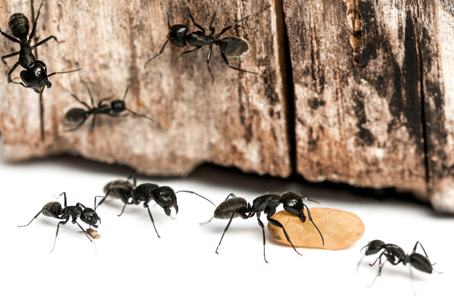
The silent saboteurs that we call carpenter ants are larger than most other ant species and can be identified by their black or dark brown bodies. These ants typically establish their primary colony in moist wood, which can include tree stumps or roots, but they are also known to infiltrate homes and buildings where they set up satellite nests in damp areas like windows, decks, and roof eaves. They are particularly active at night, when they go out to forage for food, which can include anything from sweets and meats to other insects.
The real threat from Carpenter Ants arises from their nesting habits. As they build their nests, they burrow deep into wood, creating smooth tunnels and galleries. This excavation process can severely weaken wooden beams and panels, potentially leading to costly structural damage if not addressed promptly. Over time, a heavy infestation can compromise the structural stability of a building. One critical step in prevention is to remove potential nesting sites by clearing away dead wood, stumps, and sealing potential entry points. Homeowners should thoroughly inspect the foundation, windows, and doors for cracks or openings.
The Emerald Ash Borer infests and ultimately kills ash trees by laying its eggs in the bark crevices. The larvae then burrow into the bark to feed on the inner tissues, disrupting the tree's ability to transport water and nutrients. This infestation leads to the gradual decline and eventual death of the tree, often within just a few years. The loss of ash trees is particularly impactful in Indiana, where these trees are not only a common sight in urban and suburban landscapes but also play a role in the local ecosystem. Ash trees provide habitat and food for various wildlife species, and their decline can lead to reduced biodiversity and disrupt local ecosystems.
Infested trees become weak and can pose risks during storms or under heavy winds as their branches or even whole trees can fall, potentially causing property damage or personal injury. The loss of these trees also diminishes the natural beauty and shaded environments in residential areas, parks, and along streets, impacting property values and the overall quality of life for residents.
To protect local ash trees, it is crucial to avoid transporting firewood from one location to another, as this is a common way for EAB to spread to new areas. Residents should also consider treating their valuable ash trees with approved insecticides that can protect the trees from EAB infestations. These treatments are most effective when applied by professionals and need to be repeated periodically to maintain their effectiveness.
Japanese beetles are polyphagous feeders, meaning they consume a variety of plant species, including roses, grapes, linden trees, and over 300 other types of plants. They typically feed in groups, starting at the top of a plant and moving downward, which can result in severe defoliation. The adult beetles nibble on leaf tissues between the veins, leaving behind a skeletonized remnant that significantly impairs photosynthesis, weakening the plants and reducing their aesthetic value. Additionally, the beetles' feeding attracts more beetles, thereby compounding the damage in a relatively short time.
The Impact Of House Mice On Homes And Health
House mice are known for their ability to gnaw through virtually anything in their quest to find food and nesting materials. This behavior can lead to significant damage to furniture, walls, and electrical wiring, which not only requires costly repairs but can also pose serious fire hazards due to damaged electrical connections.
Beyond physical damage, house mice are carriers of various pathogens that can be transmitted to humans through their droppings, urine, and saliva. Diseases such as salmonellosis and hantavirus are serious health concerns associated with mice infestations.
To prevent house mice infestations, seal small openings around the home, as mice can enter through gaps as tiny as a dime. Use steel wool and caulk to close off potential entry points around foundations, pipes, and vents. Additionally, ensure that food is stored in airtight containers and avoid leaving out food items that could attract mice. Regularly disposing of garbage in sealed receptacles can also help deter these pests.
Starting in late May to early June, regularly inspect plants for signs of beetle activity; catching the problem early is crucial for minimizing damage. For small gardens or valuable ornamental plants, consider installing fine netting or row covers to physically prevent beetles from reaching the plants, remembering to remove them to allow for pollination as needed.
Ready to protect your home and garden from destructive pests? Contact Fortified Pest Control today. Our team of experts is equipped with the knowledge and tools to effectively manage pest problems, ensuring your property remains secure and beautiful. Don't wait for pests to become a bigger issue; let Fortified Pest Control fortify your home against invaders.